There’s a moment in every roast that separates the instinctive roaster from the intentional one.
First crack begins. Those first pops land, and something in your brain says do something. So most roasters do the same thing. They pull heat back fast to stay in control.
It makes complete sense. It’s also one of the more common ways to flatten an otherwise great coffee.
What is Actually Happening During First Crack
First crack isn’t the finish line. It’s the starting point of the final phase.
At this point, your coffee is still hungry for energy. It needs heat to keep building sweetness, structure, and aroma. Pull back too hard, too fast, and the roast can slow down more than expected. In some cases, it begins to drag.
Instead of a smooth progression to the finish, you get a roast that lingers when it should be moving.
How this Shows Up in the Cup
The result is coffee that tastes muted. Flat. A little lifeless, like it almost got there but didn’t quite make it.
The frustrating part is the beans can look perfect. Color on point. Surface clean. But something in the cup feels hollow, like a chord with a missing note.
Why Does this Happen in Roasting?
It usually comes from the right instinct applied too aggressively. In trying to avoid overshooting, you pull back just enough energy that development stretches thin instead of finishing cleanly.
In some cases, the rate of rise, how quickly the bean temperature is increasing, slows dramatically or stalls completely. When that happens, the reactions responsible for building flavor start to fade rather than resolve.
How to Fix Your Roast
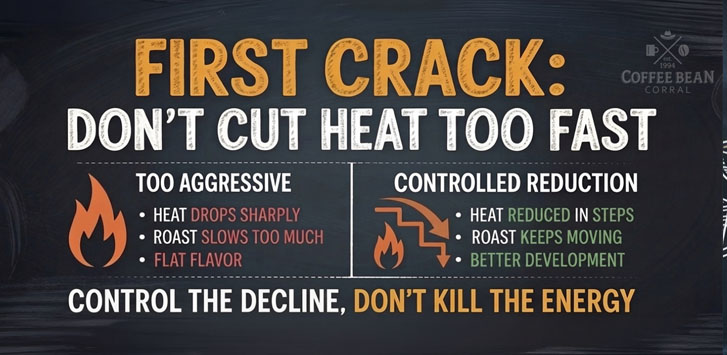
The goal isn’t to keep heat high. The goal is to reduce heat with control, gradually, not abruptly.
As first crack begins:
- Ease heat down in steps rather than one sharp drop
- Keep the roast moving forward with intention
- Don’t let it stretch much beyond your normal finish window
You can also make a small adjustment to airflow here. As first crack starts rolling, slightly increasing airflow can help carry heat through the roast more evenly and keep things moving in the right direction.
You’re guiding the roast to the finish, not slamming on the brakes.
A Simple Way to Think About First Crack
First crack is a gear shift, not a red light. You’re still in motion. You’re still building something. You’re just doing it with more precision.
A lot of roasting problems don’t come from doing the wrong thing. They come from doing the right thing too hard.
The difference between a good roast and a great one is often just how fine your adjustments are, not what the adjustments are.