In our last blog, we discussed the significance of first crack in the coffee roasting process. After sharing that information, we received a response that made our team reflect on how we communicate these concepts.
One of our longtime roasters responded with a profound experience: after nearly three years of roasting, they suddenly became permanently deaf. The first batch they roasted after this life change was, in their words, a rude awakening.
Having relied heavily on sound, they found themselves adapting to this new reality. They shifted their focus to sight, aroma, and temperature data, modifying their setup without missing a beat. Their story is a powerful reminder that while sound is helpful in roasting, it is not essential.
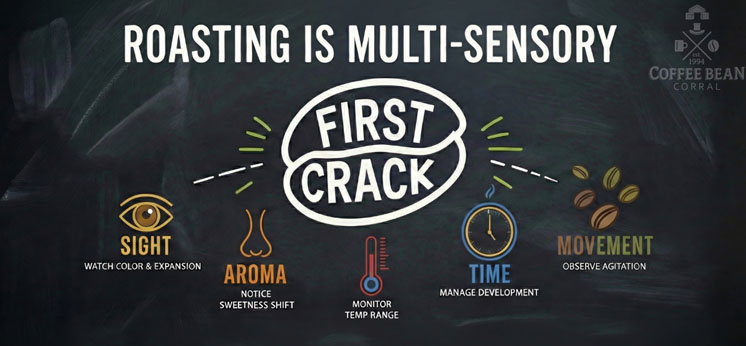
First Crack: More than an Audible Event
While you typically hear pops at first crack, this sound is merely one signal indicating structural changes in the beans. If you can’t hear it clearly, don’t worry—you can still effectively assess the roast using other cues.
1. Observe Bean Expansion
- Visual Changes
- At first crack, beans visibly expand. Look for an increase in size, a more pronounced crease, and a slight smoothing of the surface texture.
- Identifying Stages:
- If your beans remain tight, compact, and pale brown, you’re likely still pre-crack. Conversely, if they have expanded and the crease is more evident, you are either at or just past first crack.
2. Smell the Transition
- Aromatic Shifts
- The aroma changes dramatically around first crack. Prior to this stage, the roast may smell like toast or warm bread. As first crack approaches, you’ll notice intensifying sweetness and deeper caramel notes, leading to more developed roast aromatics afterward.
- Using Smell
- Pay close attention to these shifts; your sense of smell alone can guide you through the roasting stages.
3. Use Temperature as a Guide
- Predictable Ranges
- Most coffees enter first crack within a specific temperature range based on your machine. Tracking bean temperature consistently allows you to anticipate first crack, even without sound.
- Becoming Familiar
- With experience, you’ll learn your setup well enough that sound becomes a confirmation of what you already know.
4. Trust Development Time
- Understanding Development
- Instead of solely listening for the first pop, focus on development time. Once you believe you’ve entered first crack, you can control flavor by adjusting how long you allow development to continue.
- Roast Profiles
- For a light roast, opt for a shorter development time; for more body and sweetness, extend it. This method is measurable and repeatable.
The Bigger Roasting Lesson
You read color. You read aroma. You read temperature progression. You read bean movement.
Sound is one cue among many. And if one cue disappears, the craft does not disappear with it.