
For decades, Arabica has been the favorite of the specialty coffee world—praised for its sweetness, complexity, and delicate flavor profiles. Meanwhile, Robusta coffee sat on the sidelines, often associated with harsher flavors or inexpensive instant blends. But in recent years, Robusta has been making a comeback. Coffee professionals and home roasters alike are rediscovering the strengths of this misunderstood bean, sparking what many are calling the “Robusta Renaissance.”
In this blog, we’ll break down what Robusta coffee is, where it comes from, what it tastes like, and how to best roast and brew it to get the most out of its flavor profile.
What Is Robusta Coffee?
Robusta coffee comes from the plant species Coffea canephora, one of the two dominant commercial coffee species alongside Coffea arabica. While Arabica coffee accounts for about 60–70% of global production, Robusta makes up a significant portion of the rest. Robusta beans thrive in different growing conditions, oftentimes in climates where Arabica beans struggle.
Robusta definitely lives up to its name. It thrives at lower elevations, tolerates high heat and humidity, resists many pests and diseases that damage Arabica crops, and yields more fruit per plant, making it a dependable crop for farmers, particularly in challenging or unstable climates. While Arabica demands more ideal conditions, Robusta is tough, adaptable, and consistently productive.
Arabica vs. Robusta: What’s the Real Difference?
When people compare Arabica vs. Robusta, they’re usually talking about differences in flavor, caffeine content, and bean structure. Here’s a brief overview of what makes Robusta different from Arabica coffee.
Flavor Profile
Arabica is known for its sweetness and complexity. It offers bright acidity and layered notes of fruit, florals, caramel, or chocolate. While Robusta has typically been associated with supermarket instant blends and described as earthy and bitter, this stereotype is changing rapidly. As processing methods improve, high-quality Robusta is gaining traction in the coffee industry for producing smooth, bold, nuanced cups.
Caffeine Content
One of the most dramatic differences is caffeine. Robusta naturally contains nearly twice the caffeine of Arabica, lending to its more intense flavor, and it also acts as a built-in pest repellent, which is part of what makes the plant so resilient.
Bean Structure and Appearance
Robusta beans (also referred to in the industry as cherries) tend to be smaller and rounder, with a straighter center crease, while Arabica beans are larger and more oval-shaped. Robusta also contains more natural oils, which contribute to a heavier body and a thicker, velvety crema, most noticeable in espresso.
Where Is Robusta Coffee Grown?
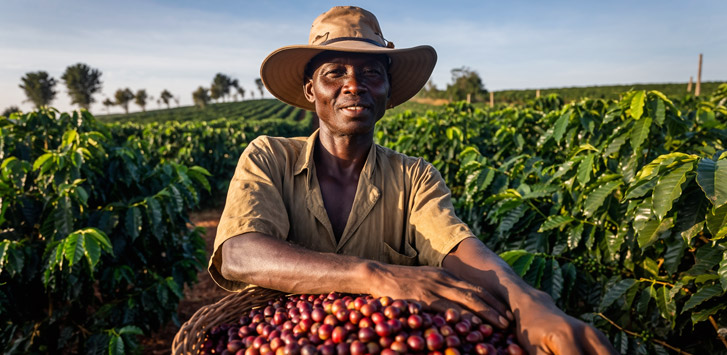
Robusta grows in regions where heat, humidity, and disease pressure make Arabica cultivation more difficult. Some of the world’s most notable Robusta-producing regions include:
-
Uganda is the birthplace of wild Robusta; its naturally occurring varieties produce a smooth, balanced cup that’s sought after in specialty circles.
-
Vietnam, the world leader in Robusta production, is known for beans with bold, cocoa-forward character and the famously rich Robusta used in Vietnamese iced coffee.
-
Indonesia grows Robusta beans that are often earthy and heavy-bodied, well-suited for dark roasts and traditional espresso blends.
-
India produces both washed and naturally processed Robusta, many of which are praised for their balance and sweetness and often used in premium Italian-style espressos.
-
Brazil cultivates a local variant called Conilon, known for its mild, chocolaty flavor and lower acidity, making it a popular blending component.
Because Robusta thrives where Arabica struggles, many experts believe Robusta will play an increasingly essential role in the future of coffee as global growing conditions shift.

Why the Coffee World Is Experiencing a “Robusta Renaissance”
For years, Robusta’s reputation suffered from low-quality production and large-scale commodity farming. Today, however, the industry is taking a fresh look and discovering that Robusta has far more potential than once believed. A few notable trends are driving this comeback.
1. Specialty Robusta Is Improving
Producers worldwide have begun adopting advanced practices for Robusta crops, including selectively handpicking ripe cherries, experimenting with new fermentation techniques, and investing in cleaner, more precise drying and processing. These improvements have transformed Robusta’s flavor profile, resulting in coffees that are brighter, sweeter, and significantly more complex. Many of the assumptions that once limited Robusta’s reputation simply don’t hold up when you taste a well-crafted, specialty-grade lot.
2. Demand for Stronger, Bolder Coffee
More coffee drinkers than ever are choosing beverages with intensity, depth, and higher caffeine levels. Robusta naturally delivers on all fronts. Because it produces a bold, full-bodied cup, it shines in drinks where strength and richness matter, like espresso, dark roasts, and cold brew. For anyone who prefers a coffee with impact, Robusta offers a satisfying alternative to lighter, more delicate Arabica profiles.
3. Climate Resilience
As climate change impacts global coffee production, Robusta’s hardiness has become a significant advantage. It grows well in hotter, more variable climates and naturally resists many of the pests and diseases that threaten Arabica crops. Roasters, researchers, and farmers alike recognize that Robusta may be essential to the long-term sustainability of coffee. This shift has encouraged more investment in Robusta cultivation and processing.
4. The Rise of Global Coffee Culture
Today’s consumers are more curious and connected than ever. Social media, specialty cafés, and global roasters have created access to diverse coffee varieties, encouraging drinkers to experiment with different origins, species, and processing methods. As a result, more people are discovering Robusta.
How Robusta is Best Brewed (and Why You Might Want to Try it)
Robusta typically produces a cup with low acidity, full body, and a bold, intense flavor. Depending on the origin and processing method, you might taste notes of chocolate, roasted nuts, warm spices, or wood.
Robusta’s natural characteristics make it a strong performer in several brewing methods. It’s widely used in espresso, where its higher oil content creates a thick, hazelnut-colored crema and lends a satisfying heaviness to the shot. In cold brew, Robusta offers a rich, chocolatey profile with low acidity and excellent strength. Many roasters also use Robusta in blends to add body, boost caffeine, and enhance depth. As specialty-grade Robustas become more available, more coffee lovers are enjoying them as single-origin brews that highlight the bean’s unique character.
Robusta is proving it has its own place in specialty coffee. With improved processing techniques, a rising demand for bold flavors, and an increasingly important role in climate-resilient agriculture, Robusta is stepping into the spotlight in a whole new way. If you’re ready to taste how rich and complex this variety can be, Coffee Bean Corral offers a growing selection of Robusta beans.