When a roast races to first crack, it can feel exciting. Everything happens quickly, the numbers look efficient, and the roast finishes in record time. But fast roasts often show their problems in the cup.

What a Fast Roast Tastes Like
Coffee from a rushed roast often tastes sharp or sour in a way that feels unpleasant, almost like biting into an underripe fruit. Instead of a smooth, balanced cup, the coffee can feel thin or watery on the tongue, with flavors that show up quickly and disappear just as fast.
You may notice that sweetness is hard to find, or that the cup tastes one-dimensional rather than full and rounded. Even darker roasts can end up tasting hollow, meaning the coffee smells strong but the flavor itself feels empty or unfinished, when the roast moves too quickly early on.
What Causes a Fast Roast?
Fast roasts are almost always the result of too much heat too early.
High charge temperatures, aggressive heat application, or not enough airflow control can push the beans through the early stages before they have time to develop structure. When this happens, the roast reaches first crack before sugars and aromatics have had time to form properly.
How to Slow a Roast the Right Way
Slowing a fast roast does not mean cutting all the heat.
Instead, try one of these small adjustments:
- Lower your charge temperature slightly
- Ease off heat earlier in the roast
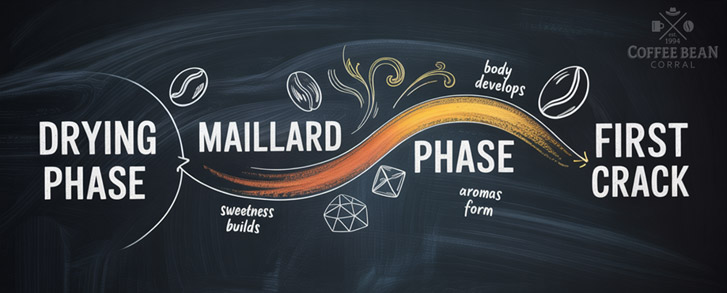
- Give the Maillard phase, the flavor development stage between drying and first crack, a bit more time.
The goal is controlled momentum, not hesitation. You want the roast moving steadily forward, not racing and not stalling.
What to Watch in Your Roast Next Time
Pay attention to how long it takes to reach first crack and how the coffee smells as it approaches it. A roast that smells sweet and bready before first crack usually has better balance waiting on the other side.
If your roast felt rushed this week, don't be discouraged. Use it as feedback. One small adjustment on the next batch is often all it takes.